What is Cultural Competency in Behavioral Healthcare Education?

Cultural competency in behavioral healthcare education is one of the most essential skills students can develop when entering the field. In today’s diverse society, effective care depends on the ability to connect with people from different cultural, ethnic, and social backgrounds. Behavioral healthcare professionals must learn to recognize, respect, and respond to the unique needs of each individual. Without cultural understanding, even the best clinical tools may fall short.

In a future article, we will examine the shift from Cultural Competency to Cultural Humility in Healthcare and Social Services. However, cultural competency remains the dominant terminology in most circles and needs to be considered. For example, the main federal and state agencies still use cultural competency to describe these efforts.

According to the National Library of Medicine, “Cultural competence refers to the ability to honor and respect the beliefs, languages, interpersonal styles, and behaviors of individuals and families receiving services, as well as staff members who are providing such services. Cultural competence is a dynamic, ongoing developmental process that requires a long-term commitment and is achieved over time.”  

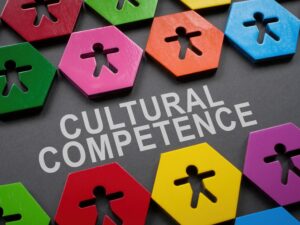
Cultural Competency
Understanding Cultural Competency in Healthcare Settings

If you are asking, “What is Cultural Competency in Behavioral Healthcare Education?”, Tarzana Treatment Centers College (TTCC) is here to answer that question and more.

Why Cultural Competency in Behavioral Healthcare Education Begins at TTCC 

As part of its mission, TTCC provides students with a solid foundation in cultural competency within behavioral healthcare education. As part of Tarzana Treatment Centers (TTC), TTCC draws from more than fifty years of excellence in delivering integrated care. TTC is widely respected for its work in treating substance use disorders (SUDs), mental health conditions, and co-occurring disorders across diverse communities. Through adult and youth services, TTC has established itself as a leader in culturally responsive, whole-person care.

TTCC applies this same commitment in the classroom. Hence, students learn more than the technical and professional skills required for success. They also learn how to build trust and foster empathy across different cultures.

Understanding Cultural Competency in Behavioral Healthcare Education

Cultural competency in behavioral healthcare education involves much more than language access or awareness of traditions. Indeed, it includes an understanding of how beliefs, customs, social structures, and stigma shape a person’s experience with mental health and recovery. Thus, TTCC students learn to consider factors like immigration history, religious beliefs, family systems, and economic barriers when developing care strategies.

For example, students are trained to recognize when family involvement is essential in decision-making or when stigma might prevent someone from seeking help. Additionally, they are taught how to use culturally appropriate communication techniques, adapting treatment plans to match each individual’s worldview.

How TTCC Brings Cultural Competency to Life

At TTCC, cultural competency in behavioral healthcare education is built into every part of the curriculum. Students engage with real case studies drawn from TTC’s decades of experience. Faculty members encourage open dialogue and provide opportunities for reflection and self-awareness. Guest speakers, collaborative learning, and trauma-informed training enhance students’ understanding of how culture affects care.

From LGBTQ+ inclusive practices to working with immigrant families, students are prepared to serve all communities with dignity and respect. The goal is to ensure that everyone has access to essential services. Indeed, the focus of behavioral healthcare education is to help everyone, regardless of background.

Become a Culturally Competent Leader in Behavioral Health

If you want to serve your community and make a lasting difference, TTCC can help you achieve that goal. With a focus on cultural competency in behavioral healthcare education, TTCC prepares students to provide meaningful, inclusive care that meets people where they are.

Explore the Programs at TTCC College today and begin your journey toward becoming a culturally responsive behavioral health professional. 

How Can I Make Behavioral Healthcare Education Affordable for Myself?

An Uplifting Guide for Future SUD Counselors by Tarzana Treatment Centers College 

If you are asking, “How can I make behavioral healthcare education affordable for myself?”, you are one step closer to opening the door to a meaningful and financially stable career. Indeed, as the staff and graduates of Tarzana Treatment Centers College (TTCC) know from first-hand experience, a career in behavioral healthcare begins with something powerful — your desire to help others.  

Still, that spark is the first step, and at TTCC, we believe nothing should block your path. Moreover, if you are wondering, “How can I make behavioral healthcare education affordable for myself?” — you are not alone. Many of our students and our graduates have shared that same concern.  

Behavioral Healthcare Education Affordable
How Can We Make Behavioral Healthcare Education Affordable for Future SUD Counselors?

The good news is, you don’t need to sacrifice quality or go into debt to open the door to becoming a Certified Substance Use Disorder (SUD) counselor. This guide explains how TTCC makes behavioral healthcare education financially accessible with transparent tuition, genuine scholarships, and flexible payment options. 

How Behavioral Healthcare Education Can Be Affordable 

You may be surprised to learn that behavioral healthcare education does not have to cost tens of thousands of dollars. While private programs often charge between $15,000 and $30,000, TTCC keeps tuition very affordable—without cutting corners.

That one-time cost (click link directly above) covers everything: registration, coursework, and hands-on clinical experience. There are no hidden fees and no required textbooks to purchase. You get what you need to succeed, not unnecessary add-ons.

Our fully online format offers you the flexibility to train at your convenience, eliminating the need to commute or relocate. It is high-quality, accessible education designed for individuals like you: ambitious and caring people who are ready to make a real difference, both in their own lives and in the lives of others. 

Scholarships and Aid to Support Your Journey

We believe your desire to help others should be supported, not hindered. That is why TTCC partners with CalMHSA and DHCS to offer meaningful financial assistance for behavioral healthcare education. A time-limited, state-funded opportunity currently available is the Peer Support Specialist Certification Fee Waiver Program. As CalMHSA states, “CalMHSA, in partnership with DHCS, is offering time‑limited fee waivers to support the behavioral health workforce.” 

These waivers cover the full cost of core training and certification for eligible applicants. At TTCC, students approved for the waiver can complete their entire Peer Support training without any tuition expense. But the deadline is approaching—September 15, 2025—so early application is encouraged.

Additional financial support options include: 

  • Los Angeles County Workforce Development Programs: Provide tuition coverage for job seekers in supported training tracks
  • TTCC Access & Impact Awards: Offer scholarships to students with lived experience, service backgrounds, or financial need

Together, these resources help remove the biggest obstacle students face—cost—so they can stay focused on learning and preparing for meaningful careers in the behavioral health field. 

Positive Payment Plans for Behavioral Healthcare Education

Even without a scholarship, you can start your education without financial stress. TTCC offers interest-free payment plans with no credit checks. You select a plan schedule. We support your progress.

This user-friendly approach means you can start your training now while managing costs in a way that suits your lifestyle. 

Comparing Behavioral Healthcare Education Options

When you consider TTCC’s very affordable rates, access to scholarships, online accessibility, behavioral health practitioners as instructors, and assistance with job placement, it is clear that the benefits of a TTCC education keep adding up. The value is clear: top-notch behavioral health education is completely accessible at TTCC.  

Behavioral Healthcare Education = Real Students, Real Impact

“I was nervous about the cost at first,” shared one recent graduate. “But TTCC helped me find a payment plan that worked. Now I am a certified counselor helping others every day.”

These are not just stories—they are examples of what is possible when education is built around people.

Discover Practical Tools for Your Future Success

Beyond affordability, TTCC equips you with tools and support to thrive: 

  • Clinical supervision from licensed professionals 
  • Access to research databases like PubMed 
  • Online learning tools with real-time instructor feedback 
  • Job placement guidance after graduation 

Indeed, everything is designed to help you learn, apply, and grow. 

You Can Achieve a Behavioral Healthcare Education

If you are wondering whether you should pursue a behavioral healthcare education for yourself, take this as a sign—it is entirely within your reach.

TTCC will give you the structure, support, and flexibility to succeed. Whether you need help covering costs, time to balance work and study, or encouragement to start something new, we are here.

Visit https://www.ttccollege.org to explore program details, learn about program costs, or speak with a real advisor who will guide you through the following steps. If you’re ready to get started, you can apply online now. 

TTCC Hosts Community Town Hall on Youth Substance Use and Mental Health

On May 8, 2025, Tarzana Treatment Centers College (TTCC) welcomed families, educators, and leaders to a Community Town Hall at Van Nuys Middle School. The goal was clear: to protect youth by addressing the growing concerns around mental health and substance use.  

Located in the heart of the San Fernando Valley, this evening gathering served as a platform for open conversation. It transcended mere statistics; it centered on stories. It highlighted voices, both young and old, sharing their thoughts in a safe, supportive environment. Indeed, the challenges of today were approached with compassion and intelligence.  

Why This Community Town Hall Mattered

Youth today navigate intense pressure. Even in middle school, students encounter dangers like fentanyl, laced marijuana, and opioids. At the same time, many struggle silently with anxiety, depression, and isolation. 

TTCC created this Community Town Hall as a space to address these realities with honesty and care. Held on a school campus, the setting served as a reminder that prevention begins in the place where young people spend the most time—at school, with peers, and surrounded by trusted adults. 

The event was not merely a presentation; it was a collective moment of recognition, reflection, and responsibility. 

Community Town Hall
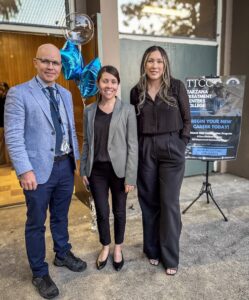
Guest Speakers Kevin Burns, Angelica Ayala, and Stephanie Giron

A Panel Grounded in Expertise and Experience 

The panel included individuals who confront these challenges daily:

  • Kevin Burns, Substance Abuse Prevention and Control Bureau 
  • Angelica Ayala, Office of Supervisor Lindsey Horvath 
  • Stephanie Giron, Psychiatric Social Worker, Van Nuys Middle School

Each panelist brought their unique perspective—policy, community, education—but their message aligned. From each panelist, the message was clear: Young people need our protection, our presence, and our resources.

The Q&A that followed was equally important. Parents asked genuine questions. Students paid close attention. Conversations extended long after the mic was turned off.

A Resource Fair That Connected People to Help  

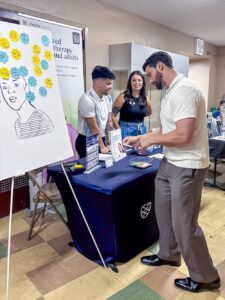
Outside the auditorium, attendees explored a resource fair that offered more than just brochures; it provided connections and solutions.  

For example, Tarzana Treatment Centers highlighted TTC’s Youth Services offerings, including the TTC Youth Summer Program, which is now underway. To learn more about the Youth Summer Program and other TTC Youth Services in Los Angeles County, please contact us today. 

Charlie Heath
People Interacting with the Charlie Heath Resource Booth

Organizations like Charlie Health and the Office of Mayor Karen Bass provided practical opportunities for youth to express themselves. Community groups and city representatives shared information on treatment programs, mental health support, and local services. 

Some attendees paused to write affirmations at a creative station, while others gathered contacts and referrals. For many, it marked their first step toward receiving help. 

Community Town Hall Resonates Weeks Later

The impact of this Community Town Hall did not conclude at 8:00 p.m. That evening fostered new relationships, heightened awareness, and reminded youth that they are not alone. 

One attendee remarked, “This was more than an event. It was a turning point.”

TTCC remains dedicated to hosting events that focus on youth, encourage honest discussions, and steer communities toward healthier futures. This town hall demonstrated that when we show up, listen, and collaborate, change begins. To learn more about our educational offerings, please reach out to us today.


📽️ Watch the Town Hall Recap on YouTube
📸 See More Highlights on Instagram 

Why Pursue an SUD Counseling Certificate in California?

Earning an SUD Counseling Certificate in California is one of the most direct and impactful ways to enter the behavioral healthcare field. With rising rates of addictive disorders and overdoses across the country, trained counselors are in high demand, and the need continues to grow. With numerous treatment centers in California, the demand for counselors remains steady. 

The Rising Need for SUD Counselors in California 

Substance use disorders affect nearly every community in California. As a result, the need for SUD counselors exceeds the supply. Completing a Substance Use Disorder (SUD) Counseling Certificate in California prepares students to meet this need. By meeting this need, students who become counselors will help save lives. 

SUD Counseling Certificate in California
Help People with a SUD Counseling Certificate

From residential programs to outpatient clinics, facilities across the state rely on SUD counselors to provide direct care and support. A Counselor’s role often includes screening, assessment, education, case management, care coordination, and relapse prevention. Moreover, Tarzana Treatment Centers College (TTCC) offers an education that combines professionalism and skill.

A Pathway to a Career in Counseling 

At TTCC, students pursuing an SUD Counseling Certificate in California receive education that combines real-world experience with academic instruction. Hence, courses are taught by licensed and certified experts in their respective fields. Moreover, the curriculum blends academic instruction with hands-on clinical training.

You will learn about the science of substance use disorders and recovery, counseling techniques, legal and ethical responsibilities, and treatment planning. Most importantly, you will complete a supervised practicum. In this practicum, the goal is to fulfill state certification requirements necessary for certification. 

According to the California Department of Health Care Services (DHCS), “Counselor certification is based upon the Addiction Counseling Competencies:  The Knowledge, Skills and Attitudes of Professional Practice, published by the Center for Substance Abuse Treatment… To obtain certification, counselors must register with one of the DHCS-approved certifying organizations.  From the date of registry, counselors have five (5) years to become certified.”

Within just over a year, many students will be job-ready and eligible for entry-level counseling positions. Some begin working while continuing their education, advancing toward full certification or additional licensure.

Benefits of an SUD Counseling Certificate in California

From the perspective of a prospective student, there are many benefits to becoming a counselor. For example, the SUD Counseling Certificate in California offers a practical and affordable way to enter the helping professions. For many students, the choice is personal.  

Some have lived through substance use disorders in their own lives.  

In addition, many others have family members in recovery, whom they support and love. Given the fatal nature of the disease, students also enter the program after experiencing the loss of a loved one. Taken together, they all share the desire to help others heal. 

Unlike many health careers, this certificate does not require years of expensive training. Thus, it is not prohibitively expensive or time-consuming. Indeed, students tailor their programs to fit specific needs. Ultimately, it provides a focused education that leads to meaningful work in the field of substance use disorder recovery. 

Start Your Journey with Tarzana Treatment Centers College

If you are ready to make a difference, the time to start is now. By enrolling in an SUD Counseling Certificate in California program, you take a bold step toward a fulfilling future. Tarzana Treatment Centers College is here to support you with expert instruction, real-world experience, and a deep commitment to community wellness.  

Learn more about our SUD Counseling Certificate in California program here. 


Choose Tarzana Treatment Centers College for Your Healthcare Education

When it comes to healthcare education, finding the right balance between quality, affordability, and hands-on experience is essential. At Tarzana Treatment Centers College (TTCC), students receive more than just classroom instruction—they gain access to a mission-driven healthcare system dedicated to community well-being.

TTCC offers a unique opportunity: professional training rooted in real-world service. It is healthcare education with a purpose.

healthcare education
Healthcare Education and Counseling Certification Helps to Save Lives

A Mission That Moves Beyond the Classroom

Tarzana Treatment Centers College is not just another educational institution. It is part of a long-standing nonprofit healthcare organization with a deep commitment to behavioral health and integrated care. This connection fosters a powerful learning environment—one that prepares students to address urgent health needs in real-time. 

The mission of TTCC is direct and grounded: Provide accessible, high-quality healthcare education that prepares students to serve vulnerable populations. By providing such educational opportunities, workforce gaps in our communities can be lessened.

What SAMHSA Recommends and How TTCC Delivers 

The national call for stronger, more connected healthcare training is clear. Additionally, healthcare education must strike a balance between evidence-based practices and hands-on clinical experience. According to the Substance Abuse and Mental Health Services Administration (SAMHSA):

“Effective education and training for substance use disorder professionals should integrate evidence-based practices with hands-on clinical experience. Programs must emphasize patient-centered care, cultural competence, and the development of counseling skills that foster recovery. By combining academic knowledge with supervised practice, training institutions prepare a workforce capable of addressing complex behavioral health needs.”

TTCC brings this model to life. Every student participates in training guided by practicing clinicians, and every lesson ties back to patient-centered care. 

Healthcare Education Programs Responding to Real Needs  

TTCC’s academic programs reflect current workforce demand. The goal is to deliver what is needed in our communities.  

Therefore, three core offerings include: 

  • Substance Use Disorder Counseling Certificate

Prepares students for state certification and immediate entry into the field of addiction counseling. 

  • Continuing Education Courses and Training

Keep professionals up to date with evolving models in behavioral healthcare and treatment. 

  • Medi-Cal Recovery Support Services Certification

Helps people turn their lived experiences into valuable professional assets while learning a code of ethics. 

What makes these programs stand out is the setting. Most importantly, TTCC students learn while immersed in a working healthcare environment. Hence, such a direct experience entails applying theory in actual treatment settings from the outset. 

Accessible, Affordable, and Flexible Healthcare Education

TTCC believes that healthcare education should be accessible to all. Thus, TTC College keeps tuition affordable and offers financial aid options to remove unnecessary barriers.  

To support working students and caregivers, TTCC provides flexible scheduling, hybrid classes, and online learning formats. Whether you are changing careers or advancing one, TTC College helps you fit education into your life, not the other way around. 

 Personalized Support in Healthcare Education

Smaller class sizes ensure students receive individual attention and guidance. Faculty members are active healthcare professionals who understand the demands of the job.

Additional benefits include:

  • Support for Clinical Placement in your local community, including TTC 
  • Mentorship from practicing clinicians 
  • Career preparation, including job search support and networking

Students graduate not only with credentials but with confidence, clarity, and experience.

Be Part of a Community That Heals

Healthcare is not just a profession—it is a calling. And TTCC is more than a college—it is a community of educators, clinicians, and students working to improve lives through better care. 

Whether you want to serve in addiction treatment, mental health services, or whole-person care, Tarzana Treatment Centers College gives you the foundation to begin. 

Start your journey in healthcare education at Tarzana Treatment Centers College 

Real training. Real purpose. Real impact. 

Evidence-Based Practices in Healthcare: What You Need to Know

In today’s rapidly evolving healthcare landscape, evidence-based practices in healthcare (EBP) are essential for delivering high-quality patient care. At Tarzana Treatment Centers College (TTCC), we prioritize integrating EBP into our curriculum to prepare students for real-world challenges. However, what are evidence-based practices, and why are they so critical? 

Evidence-Based Practices
Evidence-Based Practices in Healthcare Improve Treatment Outcomes

A study published in the National Library of Medicine states, “Health care organizations increasingly strive to deliver care that is both evidence based and patient centered.” 

Therefore, TTCC emphasizes both principles in its educational and certification programs in response to this focus. Indeed, balancing science with compassion, our course offerings take a holistic approach to healthcare.

What are Evidence-Based Practices in Healthcare?

Evidence-based practices in healthcare refer to clinical approaches that combine the best available research, clinical expertise, and patient preferences to guide decision-making.

The goal is to ensure that healthcare providers use scientifically validated methods to improve patient outcomes. Key components of EBP include:

Scientific Research:  

Using peer-reviewed studies and clinical trials to inform treatment plans.

Clinical Expertise:

Leveraging the knowledge and experience of healthcare professionals.

Patient Values: 

Considering individual patient needs and preferences when designing care strategies.

By adopting evidence-based practices in healthcare, providers can reduce variability in care, enhance treatment effectiveness, and improve overall patient satisfaction. The principles of patient care at Tarzana Treatment Centers are highlighted on the TTCC website:

“Throughout its history, TTC has maintained focus on two primary goals: improving the quality of care provided to patients and expanding the number of patients who receive that care.”

Why Evidence-Based Practices Matter in Healthcare Education

Healthcare constantly advances, and professionals must stay updated with the latest research-backed techniques. Hence, training in evidence-based practices in healthcare ensures that future clinicians:

  • Deliver Safer Care: Minimizing risks by using proven methods. 
  • Improve Outcomes: Increasing recovery rates and patient well-being. 
  • Adapt to Changes: Staying current with medical advancements.

At TTCC, we emphasize EBP to equip students with the skills needed to excel in dynamic healthcare environments. Indeed, we help you realize your career development goals.

How TTCC Integrates Evidence-Based Practices in Training

TTCC is committed to preparing students through a curriculum rooted in evidence-based practices in healthcare. Our programs incorporate:

  1. Research-Driven Curriculum

Courses are designed around the latest medical research, ensuring students learn the most effective treatment modalities.

  1. Hands-On Clinical Training

Students apply EBP principles in real-world settings under the guidance of experienced instructors, reinforcing the connection between theory and practice.

  1. Interdisciplinary Collaboration

Healthcare is a team effort. TTCC fosters collaboration among students in different disciplines, mirroring real healthcare environments where EBP is essential.

  1. Continuous Learning & Adaptation

We teach students how to critically evaluate new research, ensuring they remain at the forefront of evidence-based practices in healthcare throughout their careers.

As healthcare continues to evolve, professionals trained in evidence-based practices in healthcare will lead the way in delivering exceptional care.

Preparing for a Future in Healthcare with TTCC

At TTCC, we ensure our graduates are knowledgeable and skilled in applying research-backed strategies to real patient scenarios.

By choosing TTCC, students gain a competitive edge—learning to think critically, adapt to new evidence, and provide the highest standard of care.

Advance Your Healthcare Career with Evidence-Based Training

Explore TTCC’s programs today and discover how we integrate evidence-based practices in healthcare to prepare you for success in this vital field. Please take the time to contact us today to learn more about an exciting future for you! 

Tarzana Treatment Centers College Supports Youth Offenders at the California State Prison in Lancaster

Supporting youth offenders is a priority to help avoid a relapse into criminal activity. On February 26, 2025, the Peer Support and Outreach Teams from Tarzana Treatment Centers College (TTC College) participated in the HOPE Event at the California State Prison in Lancaster. As a day overflowing with inspiration and positive messaging, the event points towards viable recovery outcomes for youth offenders.

With a focus on educating and supporting youth offenders who are struggling with substance use disorders, the power of such an impactful gathering is undeniable. Additionally, with a mission to reduce overdoses and promote long-term recovery of youth offenders within the prison system, the event reflects the ideals of TTC College. The program at TTC College believes in treating people on a level playing field. 

HOPE Event
HOPE Event at the California State Prison in Lancaster

HOPE = A Coalition Supporting Youth Offenders.

Moreover, the HOPE Event brought together a coalition of agency leaders, incarcerated individuals with lived experience, and community-based organizations. By focusing on behavioral health, substance use recovery, and mental wellness, these organizations hope to improve recovery rates for youth offenders. As the prison system grapples with a troubling rise in overdoses, this event is a proactive response. By aiming at breaking cycles of addiction in youth offenders, TTC College supports rehabilitation. 

Such rehabilitation efforts occur through positive interactions that promote connection, education, and hope. The TTC College team members engaged in powerful conversations with participants throughout the day. Such discussions focus on developing coping strategies and support networks. Hence, the event fostered meaningful exchanges between youth offenders and individuals who have walked the path of addiction and found recovery. Thus, it offered a relatable and empowering message of resilience and transformation.

Peer Support Guides Youth Offenders in Lancaster

Moreover, the presence of TTC College’s Peer Support and Outreach Teams underscores the importance of peer-led support. For example, community reintegration is essential for youth offenders in substance use recovery. Such participation reflects the TTC College’s continued commitment to reaching individuals where they are. Indeed, TTC College supports the journey of youth offenders back into the community with dignity, knowledge, and encouragement.

Youth Offenders
TTC College Outreach Teams Helping Youth Offenders

In addition, TTC supports other organizations on the same path at such events. End Overdose was one of the organizations taking part. Their mission aligns with TTC’s prevention efforts, including Naloxone education and distribution. On the End Overdose Instagram page, the event’s success is celebrated with a group photo.

The HOPE EVENT = Hope for the Future

The HOPE Event represented more than a one-time gathering—it was a critical step toward shifting the culture around substance use in correctional facilities. Indeed, connecting youth offenders with trusted community resources and voices of lived experience is a vital step. Moreover, such an event helps lay the foundation for changes that can ripple beyond prison walls.

TTC College is proud to be part of this essential work. The Peer Support and Outreach Teams at TTC College look forward to continuing their education, empowerment, and recovery mission. When it comes to helping youth offenders, the focus is on one individual, one story, and one step at a time. 

Top 5 Reasons to Pursue a Career in Integrated Healthcare

For many people, a career in integrated healthcare is an opportunity that makes sense. The healthcare industry is evolving, and integrated healthcare is at the forefront of this transformation. As the demand for holistic, patient-centered care grows, so does the need for skilled professionals. Indeed, with the proper training, such professionals bridge the gap between physical health, mental health, and social services.  

At Tarzana Treatment Centers College (TTCC), we believe that a career in integrated healthcare is a smart choice for job security. Moreover, it is an enriching path for those who want to make a difference in their communities. 

Five Reasons to Consider a Career in Integrated Healthcare
career in integrated healthcare
TTCC Helps You Pursue A Career in Integrated Healthcare

Below are the top five reasons to consider pursuing this dynamic and impactful opportunity.  

1) Growing Demand for Integrated Healthcare Professionals

The healthcare landscape is shifting toward a more collaborative approach, where treating the whole person—mind, body, and spirit—is prioritized. Additionally, this shift has created a surge in demand for professionals trained in integrated healthcare. From behavioral health specialists and SUD counselors to care coordinators and peer support specialists, the opportunities are vast and growing.

Therefore, by pursuing a career in integrated healthcare, students position themselves in an expanding field. Also, a career in integrated healthcare helps to address the complex needs of diverse populations. In other words, it is a win-win on multiple positive fronts.

2) Job Security and Career Advancement

With the increasing emphasis on integrated care models, professionals in this field enjoy exceptional job security. Healthcare systems, government agencies, and nonprofit organizations are actively seeking individuals who can navigate the intersection of physical and mental health services. The Bureau of Labor Statistics states, “Strong growth is projected in mental health-related employment.” 

At TTCC, our programs are designed to equip students with the skills and certifications needed to excel in these growing fields. We ensure our students are well-prepared to meet the demands of employers and advance in their careers.

3) Affordable and Accessible Education at TTCC

One of the most significant barriers to pursuing a healthcare career is the cost of education. At TTCC, we are committed to making a career in integrated healthcare accessible to everyone.

Our in-person and online classes are affordable, flexible, and designed to fit into a modern person’s busy life. Whether the student is a working professional or a recent high school graduate, TTCC provides the resources and support they need to succeed. Moreover, they can access this success without breaking the bank.

4) Hands-On Training and Real-World Experience

TTCC stands out for its emphasis on practical, hands-on training. Our programs are developed in collaboration with Tarzana Treatment Centers, a leader in integrated healthcare services.

This partnership ensures that our students gain real-world experience working with diverse populations. Moreover, they get to see firsthand and address complex health challenges. By the time a student graduates, they are ready to hit the ground running in their new career in integrated healthcare.

5) The Opportunity to Give Back

Few careers offer the level of personal fulfillment that comes from helping others. A career in integrated healthcare allows students to make a tangible difference in the lives of individuals and families in need. Whether providing direct care, coordinating services, or advocating for systemic change, work in the field has a lasting impact on the greater community.  

At TTCC, we instill a sense of purpose and compassion in our students. Hence, they are prepared to be skilled professionals and empathetic caregivers.

Start A Career in Integrated Healthcare with TTCC

The future of healthcare is integrated, and there’s no better time to join this transformative field. With affordable tuition, flexible learning options, and a curriculum designed to meet industry demands, TTCC is a viable gateway to a rewarding career in integrated healthcare. 

Take the first step toward a future filled with purpose, stability, and the chance to make a real difference. Please visit TTCC today and discover how we can help you achieve your goals. 

Your career in integrated healthcare starts here!

How to Build the Behavioral Health Workforce through Strategic Partnerships 

The behavioral health workforce needs to expand in today’s challenging times. The field faces a critical workforce shortage, making strategic partnerships essential for meeting the growing demand for services. Indeed, alliances are the key to raising awareness and community outreach.

Collaboration with community organizations, educational institutions, and service providers at Tarzana Treatment Centers College (TTCC) fosters a robust network of resources, expertise, and innovative solutions. These partnerships drive workforce development by improving access to behavioral health services, ensuring diverse communities receive the support they need. 

TTCC Behavioral Health Workforce Initiatives 

  1. TTCC Peer Support Certification Program 

TTCC’s Peer Support Certification Program is designed for individuals with lived experience in substance use disorders (SUD), mental health challenges, trauma, or justice involvement. Hence, this program provides training for becoming a Peer Support Specialist. By equipping participants with the skills to help others, the program supports the growth of the behavioral health workforce. The impact is significant: 

  • Through partnerships with community-based organizations, program enrollment has increased by 30% over the past year. 
  • 85% of graduates have secured employment in behavioral health roles, demonstrating the program’s success in workforce development. 
  1. HOPICS Homeless Connect Day 

TTCC actively engages with underserved populations, such as those experiencing homelessness. At HOPICS Homeless Connect Day, TTCC’s outreach team provides training and resources tailored to the needs of unhoused individuals. We also strengthen partnerships with local agencies addressing this issue, putting the behavioral workforce into a proactive mode. 

  1. Partnerships with Hacienda of Hope 

By collaborating with Hacienda of Hope, TTCC is addressing the intersection of housing instability, SUD, and mental health challenges. Joint workshops and funding proposals are being developed to enhance service delivery. These initiatives address the future needs of the behavioral health workforce. 

Roundtable Collaboration Strengthens the Behavioral Health Workforce 

The Behavioral Health Workforce Roundtable is a TTCC project that brings together organizations focusing on the behavioral health workforce issue. Such a coming together strengthens the Behavioral Health Workforce. The goals include: 

  • Identifying workforce barriers. 
  • Sharing best practices. 
  • Developing solutions for service delivery challenges. 

Key Outcomes of TTCC’s Roundtable Collaboration 

  • Over 45 organizations participated in the last session. 
  • The creation of subcommittees that focus on behavioral health workforce issues. 
  • Issues addressed included education access, funding, workforce diversity, and reducing mental health and substance use disorder stigma. 

Ongoing Progress of the Roundtable Collaboration 

  1. Enhanced Communication Channels 

A shared platform now facilitates updates and collaborative planning among partners. 

  1. Joint Training Sessions 

New initiatives include workshops on trauma-informed care, Narcan training, and cultural humility. 

  1. Case Scenario Collaboration

Real-time discussions on client care barriers lead to new referral pathways.  

The Importance of Behavioral Health Workforce Development 

The Roundtable Collaboration is an excellent example of a strategic partnership that helps expand the behavioral health workforce. Strategic alliances are crucial for building a skilled and diverse workforce that reflects the communities served.

TTCC prioritizes equity and access through inclusive training, mentorship, and outreach programs. You can support workforce equity and inclusion by connecting with TTCC’s outreach initiatives.  

Please explore opportunities to partner with TTCC in training, program development, and community engagement. For more details, contact Tarzana Treatment Centers College


Innovating Workforce Education by Revolutionizing SUD Practicum Experiences

At Tarzana Treatment Centers College (TTCC), innovating workforce education is a core principle of our program. Hence, the college’s commitment to progressive education is the foundation for cultivating the next generation of healthcare professionals. 

In the 25th year of the new millennium, workforce education is a key to positive self-improvement. First, it helps people develop their educational opportunities. Second, through such expansion, they can improve their earning power and better their lives. 

From over fifty years of hands-on experience, Tarzana Treatment Centers (TTC) knows the value of substance use disorder (SUD) treatment. Indeed, SUD treatment is a vital component of behavioral healthcare. In treatment settings, workforce education is crucial for improving patient outcomes.

For example, SUD practicum experiences help bridge the gap between academic knowledge and real-world application. At the same time, such workforce education helps treatment professionals provide a higher quality of care. 

Workforce Education and SUD Practicum Experience 

At TTCC, our commitment to progressive education is the foundation for the next generation of healthcare professionals. Here are strategies that help make this happen. 

1. Standardized Curriculum 

Adopting a standardized approach to learning allows students to develop active listening and crisis management skills within a structured environment. Thus, such workforce education approaches enhance resilience and increase confidence. At TTCC, the curriculum challenges our students to succeed. 

2. Interdisciplinary Learning Communities 

Collaboration among students from various disciplines, including mental health and social work, is key to workforce education. Hence, such collaboration cultivates a comprehensive understanding of SUD treatment. Moreover, it enhances teamwork, providing students with diverse and interdisciplinary experiences in addiction counseling. 

3. Peer Mentoring and Supervision  

Peer mentoring and supervision provide essential emotional support. As a necessary aspect of workforce education, it fosters community through shared experiences and reflective learning. Thus, individuals who have successfully navigated their recovery journeys offer guidance, support, and encouragement in their support roles. 

Workforce Education, the Community, and Trauma-Informed Care 

4. Community-Based Learning  

By engaging directly with community organizations, students gain an understanding of the challenges faced by marginalized populations. Additionally, such engagement fosters cultural humility. They strengthen the recovery community by building a strong and enduring support network. Such interaction offers valuable insights while reminding patients in recovery settings that they are not alone. 

5. Trauma-informed and Culturally Sensitive Approaches  

Training in trauma-informed care and cultural competence is key to workforce education in healthcare settings. Moreover, such training fosters compassionate interactions with individuals facing substance use disorders (SUD). Indeed, many individuals have experienced trauma throughout their lives. Therefore, practicum experiences in SUD should be based on a deep understanding of trauma and its effects. Students also focus on empowerment by enhancing patients’ self-worth through such sensitivity. 

6. Virtual and Hybrid Practicum Models

Tarzana Treatment Centers College is at the forefront of educational innovation. Indeed, innovation is a key to workforce education. By harnessing the latest digital technologies to provide a wide array of virtual and hybrid learning models, this approach enhances accessibility. It also opens the door to a rich spectrum of diverse educational opportunities. 

The Visionary Future of Workforce Education 

At TTCC, health educators and leadership adopt a visionary perspective, designing programs that prepare our learners to be trailblazers in tackling modern healthcare challenges. The aim is to allow comprehensive training to empower students to drive impactful changes within the workforce.

Ultimately, such training fosters a dynamic environment where innovation meets real-world solutions. Such a commitment to excellence is the workforce education requirement. By tackling challenges with patients first-hand, students learn in a real-world setting. 

Hello, Welcome to TTC College!

Embark on a transformative journey of learning and discovery your potential here at TTC College. Join a vibrant community dedicated to academic excellence and personal growth – apply now to start your future!